

Stop Fixing Symptoms: A Root Cause Analysis Toolkit for Real Projects
The root cause toolkit that finds what actually broke your project, so you stop solving the same failure twice.

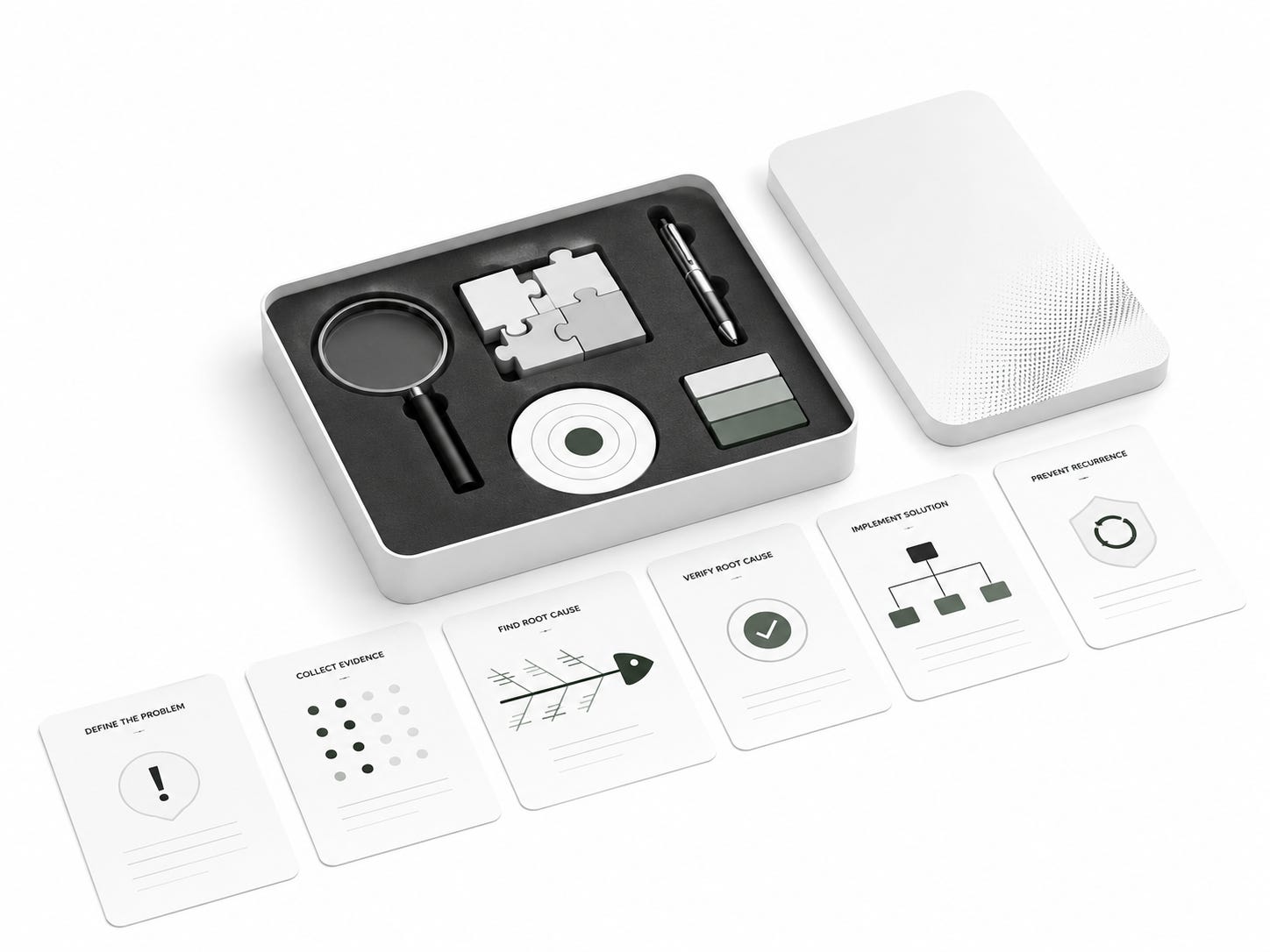
Before we start, you might think these notes are just tips, but they are parts of a complete delivery system. If you find value here, you are likely missing out on the specialized layers designed to help you navigate complexity:
The Standards: Understand the frameworks that govern high-impact delivery at Standards & Frameworks.
The Toolkit: Access the Free Resources to audit and upgrade your project documentation.
The Accelerator: For those ready to move from coordination to strategy, the VIP Premium Packs provide the systems to scale your impact.
This is a Premium Pack at Project Management Compass:

It happened again… Same failure, second time this year. The release slipped, the client noticed, and in the retro, someone said the words we always say. “Communication broke down.”
Everyone nodded. We wrote it on a sticky note. We added an action item, “improve communication,” and we went home. Six months later, here we are.
I have written “poor communication” as a root cause more times than I want to admit. Sounds honest, right? It is not. It is a symptom wearing a cause’s clothes.
Most root cause analysis on projects stops at the first answer that lets everyone go home.
That is the trap. We mop the floor and never look up at the leaking pipe. You can mop every single day. The water keeps coming.
This pack is the toolkit I wish someone had handed me earlier.
Four moves, real tools, and a way to tell whether you found the cause or just a comfortable story. Call it the move from symptom to system.
Before the tools, the three ways root cause analysis quietly fails. You will recognize all three.
We stop too early. The first plausible answer feels like the truth because it ends the discomfort in the room.
We blame a person. “The developer underestimated.” Now we have a culprit, and a culprit feels like a cause. It is not.
We write an action that nobody embeds. “Be more careful next time” depends on memory, and memory is the weakest thing on any project.
Fix those three and your retro stops being theater.
Move 1. Define the problem before you chase it
Most analysis fails before it starts, because the problem statement is mush. “The release was a mess” is not something you can investigate. It is a feeling.
There is an old tool from Charles Kepner and Benjamin Tregoe that fixes this in ten minutes. Is / is not. You map the problem along four lines, and for each one you write what it is and, just as important, what it is not.
What. The release failed in production, not in staging.
Where. It broke on the payment service, not on the rest of the build.
When. It happened on the Friday deploy, not on any midweek deploy.
How much. Three of the last four Friday releases, not the Tuesday ones.
Look at that last column. The trouble is concentrated, Friday and the payment service, not smeared across every release you ever shipped. You have not solved anything yet. But you stopped searching the whole ocean and started searching one bay.
Maybe that sounds obvious. Watch your next retro and count how many minutes pass before anyone defines the problem this tightly. Usually zero.
