

How to Break Project Paralysis Without Waiting for Perfect Data
Waiting for absolute certainty is quietly burning your project budget and motivation. Learn how to break the alignment loop and get your execution engine moving today.

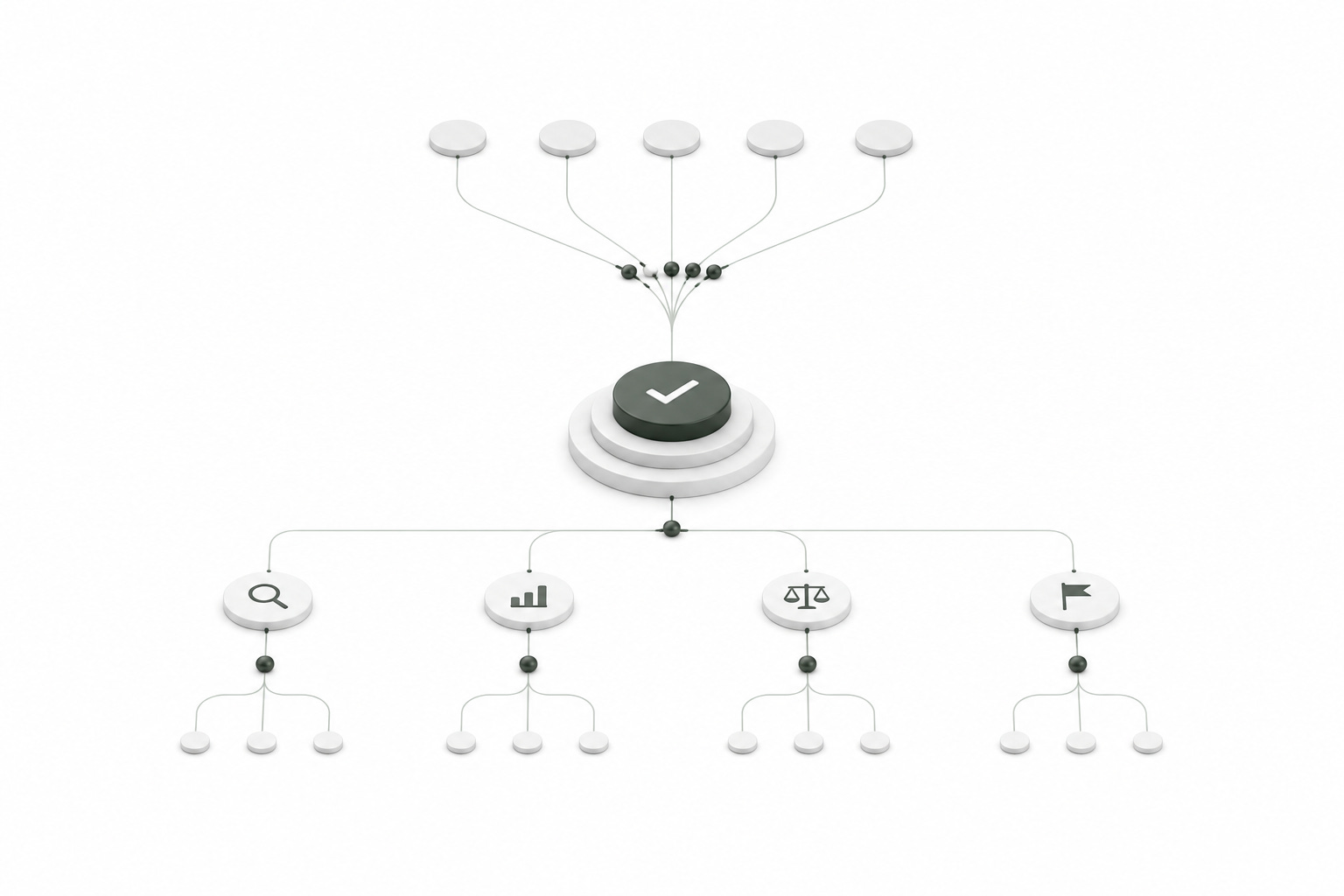
Before we start, you might think these notes are just tips, but they are parts of a complete delivery system. If you find value here, you are likely missing out on the specialized layers designed to help you navigate complexity:
The Standards: Understand the frameworks that govern high-impact delivery at Standards & Frameworks.
The Toolkit: Access the Free Resources to audit and upgrade your project documentation.
The Accelerator: For those ready to move from coordination to strategy, the VIP Premium Packs provide the systems to scale your impact.
Last week we left a car parked in the driveway. The decision nobody would make. This week is about the line that keeps it parked.
“We just need more data.”
Responsible, right? At first, yes. Nobody wants to bet the architecture, the vendor, or the release plan on a hunch. Understanding the risk before you commit is the job.
But there is a line where “more data” stops being risk management and quietly turns into a way to not decide. You have seen it. The team needs to pick a direction, and for a while the analysis is healthy.
Then the same questions come back.
One more report. One more workshop. One more benchmark. One more alignment round. Nothing is officially blocked. Nothing actually moves.
More data, at that point, is the driver who keeps adjusting the mirrors and never turns the key.
And it is the most respectable form of delay there is. It does not look like avoidance. It looks careful. It looks like governance. Meanwhile the delivery engine pays a price nobody put on the slide. Engineers start guessing. Product works around the gap. Dependencies stack up. Architecture debt grows in the dark. Trust thins out. The calendar keeps moving, and the project loses its direction.
Data is essential, and I am not arguing against it. But data shows you what already happened. It finds patterns, it tests assumptions, it can kill a bad opinion in one chart.
What it cannot do is hand you a path with the risk removed. Every real project decision is still a bet made under constraints.
So the job of project leadership is not to wait until the bet disappears. Maybe it never was.
The job is to build something that makes better bets, tests them sooner, and corrects them faster than reality can punish them.
Why Smart Teams Still Make the Bad Call
Bad project decisions are rarely the work of foolish people. They come from normal human bias dropped into a complex delivery environment.
Chip and Dan Heath, in their book Decisive, map four traps that catch almost everyone: narrow framing, confirmation bias, short-term emotion, and overconfidence.
They built the WRAP method around beating them. Once you have the names, you start seeing all four in project work, every single week.
Narrow framing is when the team shrinks a complex choice into a fake yes or no. Migrate or do not migrate. Outsource or do not. Launch or delay.
Confirmation bias is when everyone gathers the data that happens to support the option they already like.
Short-term emotion is when a painful steering committee, a missed milestone, or one loud stakeholder pushes the room toward whatever brings relief today and damage later.
Overconfidence is when the plan quietly assumes the future will behave exactly like the spreadsheet.
So decision quality cannot lean on intelligence or seniority alone. It needs structure. Not structure that promises the right answer, there is no such thing.
Structure that makes the conversation better before the call, and the correction faster after reality answers back.
Project management is not about filling spreadsheets, and the difference between a PM who is “overwhelmed” and one who is “in control” often comes down to the systems they rely on.
Review the Standards: Anchor your work in global best practices at Standards.
Use the Resources: Download the guides and templates on the Resources Page.
Upgrade to VIP: Get the complete execution framework via VIP Access.
Most weak decisions start too narrow. The team is not asking “what are our real options.” It is asking “should we approve this one.”
Small difference, and it changes everything.
Once a single proposal is on the table, people slide into defense. Supporters prove it works. Critics prove it fails. The meeting becomes a fight about one idea instead of a search for a better one.
A simple way out is the vanishing options test.
